


GO HAWKS
YAKIMA
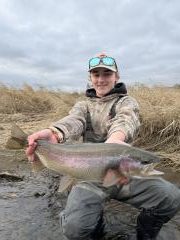
Drew Jansen with an absolute specimen caught on a dry skwala on the 6th of February.
Well, with the unseasonably warm weather lately, the fishing has been stellar, even some dry skwala eaters. The weather pattern is about to change and so will the catching most likely. The dry fly game as of recently, will definitely be less. Water temps will drop and slow the fishing overall. That being said, the vortex pattern appears to be reasonably short lived.
Bugs of the season
#8-12 Pats Stone
#8-12 San Juan worms Pink, Red, Wine, Pink and Red
#12-16 Prince, lightning Bugs
#2-10 Streamers Sheila Sculpins, Sculpzilla, Sparkle Minnows, Bow river buggers
Check this breakdown of our current water/snow situation
OLYMPIC PENINSULA
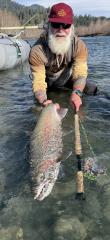
STEVO with a 20 pounder:))) This fish was caught using a standard floating skagit head with 10 feet of T-14 and a slightly weighted bug of 3 inches.
Working for your fish is part of the equation. Lately we have had to work for every single one. Appreciation is the word when it all comes together.
Skagit Lines used lately…
Gamechangers
-Floating, Intermediate, Type 3
-Floating, Intermediate
Standard Skagit Max with
T-8, T-11, T-14, T-17
Keeping your fly in the strike zone is crucial and depends on where you believe the fish are; holding or traveling? If you believe they’re holding in heavy nuggets based on the water being low and clear, then utilizing integrated lines might be a smart tactic. If you believe the fish are on the move a lot, 10 feet of T8 might be sufficient. One of the best grabs lately was on T8 and a slightly weighted fly. Unfortunately, that fish did not stay connected because the hook was wrapped around the head of the fly. Remember, as noted in the last post, removing glitches out of the equation that you’re able to control and prevent, will increase your odds on landing fish.